
By: Concentus
At first blush, “Be Like the Bird” by Abbie Betinis appears unremarkable. It’s a short, unison piece that gets sung as a canon. Compared to her complex and multi-movement “From Behind the Caravan,” which Concentus performed in 2019, this new piece seemed extremely simple, almost trifling. And yet…
First, there are the composer’s notes:
“This canon was composed in 2009, just after I’d completed cancer treatment for the second time. My parents and I sent it out as our Christmas card that year which continue a tradition started in 1922 by my great-grandfather, Rev. Bates G. Burt and was carried on by his son Alfred Burt, now famous for carols like “Caroling, Caroling” and “Some Children See Him.” This particular canon, inspired by my own struggle, is dedicated to High Rocks for Girls, an innovative school for middle and high school girls, founded by Susan Burt in the mountains of rural West Virginia. May High Rocks continue to educate, empower and inspire each girl to know that “she hath wings.”
Second, the message of the poem is pretty powerful. Here is the original French text, by Victor Hugo, with the translation Betinis used:
Soyez comme l’oiseau, posé pour un instant
Sur des rameaux trop frêles,
Qui sent ployer la branche et qui chante pourtant,
Sachant qu’il a des ailes!
Be like the bird that, pausing in her flight a while
On boughs too slight,
Feels them give way beneath her, and sings
Knowing she hath wings.
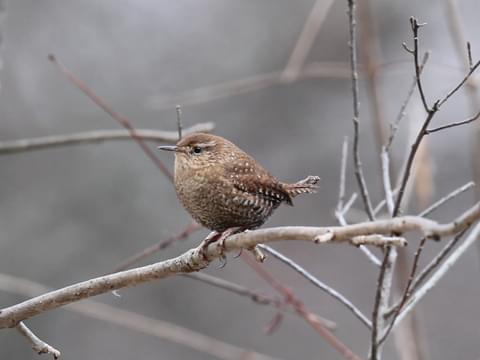
The original lines comes at the end of a 6-part poem by Victor Hugo, in which Hugo is addressing a religious, female companion who is sad. In context of the poem, these last lines could be a reminder that the soul is on earth for a fleeting moment, and the weight of the world will be lifted when her soul goes to Heaven. Alternatively, it could be a suggestion that even in adversity, we have the grace and capacity to overcome. In French, “l’oiseau” is masculine, so many translations call the bird a “he” (if the poem had been written in English, the bird would probably have been “it,” since we don’t “gender” our nouns). For Betinis’ piece, written for treble voices, she uses the feminine, which is equally valid, and much more appropriate. Betinis could have written complicated harmonies, and an instrumental accompaniment, but she didn’t. The message of the poem was probably so important to her that she felt it needed no ornamentation. There is a directness, a solidarity in singing a piece in unison. The harmonies, and internal dissonances, come in performing the piece as a canon.
We look forward to presenting this piece at our concerts in January 2026, and invite you to reflect on the message as we lift our voices, first together, and then in support of each other as each part takes their turn, and resolves in a final “knowing she hath wings.”
Please save the dates:
Friday, January 16, 2026: 7:30pm at Linehan Chapel, Nazareth University
Saturday, January 24, 2026: 3pm at First Presbyterian Church of Pittsford
 Concentus Women's Chorus